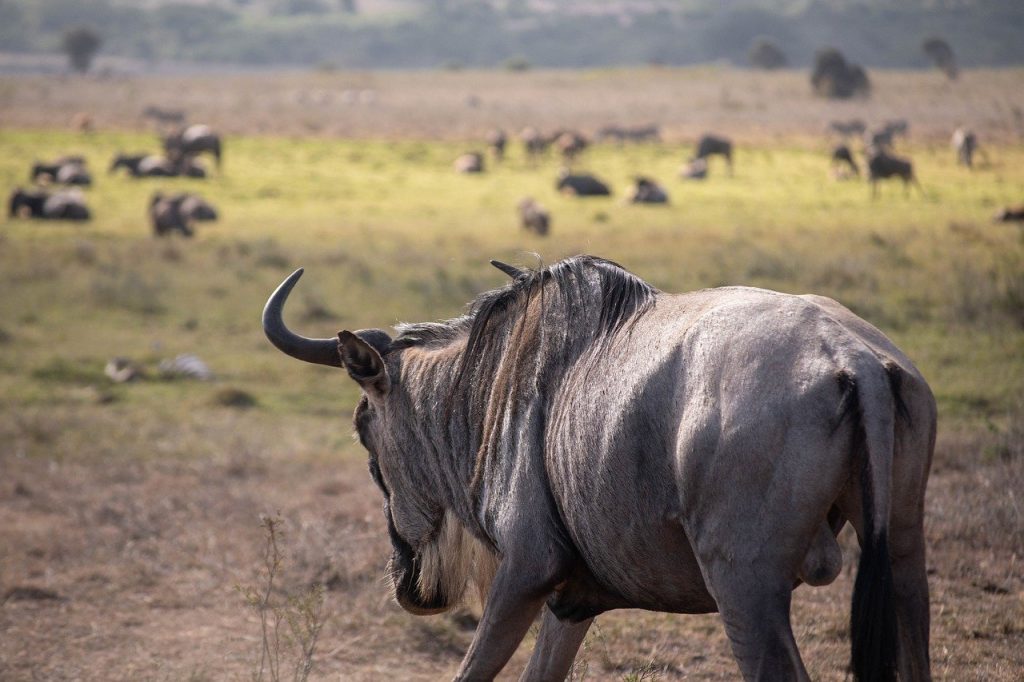
The wildebeest, also known as the gnu, is one of Africa’s most iconic and fascinating animals. These large antelopes, belonging to the genus Connochaetes, are best known for their dramatic migrations across the plains of East Africa. Their journey, which spans hundreds of miles, is one of the most remarkable natural spectacles on the planet. Let’s delve into the life, behavior, and significance of the wildebeest.
Physical Characteristics
Wildebeest are robust, muscular animals characterized by their distinctive appearance. They have large, box-like heads with a broad muzzle, curved horns, and a sturdy frame supported by strong legs. Their coats are typically a blue-gray color with a darker mane and tail, though variations can occur. Adult males, known as bulls, can weigh up to 600 pounds, while females, or cows, are slightly smaller.
Habitat and Distribution
Wildebeest are primarily found in the grasslands and savannas of Eastern and Southern Africa. They thrive in regions with abundant grassy plains, which provide them with their primary food source. The Serengeti-Mara ecosystem, encompassing the Serengeti National Park in Tanzania and the Maasai Mara National Reserve in Kenya, is the most famous habitat of the wildebeest, hosting the largest population.
Diet and Feeding Behavior
As herbivores, wildebeest primarily graze on grasses. They are selective feeders, often preferring shorter grasses rich in nutrients. Their feeding behavior is closely tied to the availability of fresh grass, which is influenced by seasonal rains. This dependency on grass and water is a driving force behind their migratory patterns.
The Great Migration
The Great Migration is perhaps the most extraordinary aspect of wildebeest behavior. Every year, over 1.5 million wildebeest, accompanied by hundreds of thousands of zebras and gazelles, embark on a circular journey of about 1,200 miles. This migration is driven by the search for fresh grazing and water, following the patterns of the seasonal rains.
Key Stages of the Migration
Calving Season (January to March): The migration begins in the southern Serengeti, where wildebeest give birth to their young. The synchronized calving results in thousands of calves being born within a short period, overwhelming predators and ensuring the survival of many newborns.
Northward Movement (April to June): As the dry season approaches, the herds start moving northwards in search of greener pastures. This journey involves crossing the Grumeti River, where crocodiles lie in wait for an easy meal.
The Mara River Crossing (July to October): The most dramatic and perilous stage of the migration occurs when the herds reach the Mara River. Crossing the river is fraught with danger, as strong currents and predators take a heavy toll. However, it is a crucial part of their journey to reach the lush grazing lands of the Maasai Mara.
Return South (November to December): As the rains return to the Serengeti, the wildebeest begin their journey back south, completing the migration cycle. The herds spread out across the Serengeti, taking advantage of the new growth of grasses.
Ecological Impact
The wildebeest migration plays a vital role in the ecosystem. Their movement helps to fertilize the soil with their droppings, promoting grass growth and maintaining the health of the grasslands. The migration also supports a diverse range of predators, including lions, hyenas, and crocodiles, which rely on the wildebeest for food.
Conservation Status
While the wildebeest population is currently stable, they face threats from habitat loss, climate change, and human activities such as poaching and fencing. Conservation efforts are crucial to ensure the preservation of their migratory routes and the ecosystems they support.
Experiencing the Migration
Witnessing the Great Migration is a bucket-list experience for many wildlife enthusiasts. The sight of thousands of wildebeest moving in unison, braving rivers and predators, is both awe-inspiring and humbling. To experience this natural wonder, booking a safari with reputable operators like Arem Safaris ensures a safe, informative, and unforgettable adventure.
Conclusion
The wildebeest, with their incredible migratory journey, are a testament to the resilience and complexity of nature. Their annual trek across the Serengeti and Maasai Mara not only captivates the imagination of millions but also underscores the importance of conserving our planet’s natural wonders. So, whether you’re a seasoned safari-goer or a first-time visitor, the wildebeest migration is an experience that promises to leave a lasting impression.